News » Joint Industry Statement: CO Transport infrastructure
Joint Industry Statement: CO Transport infrastructure, Enabling a Pragmatic Framework for early Market Development
Downloads and links
Recent updates
However, the European CO₂ transportation market remains at an early stage of development, with limited infrastructure in operation and many projects still facing significant regulatory, financial, and coordination challenges. At this stage, the priority should be to enable deployment and support the de-risking of investments for current and future projects, rather than focus only on regulatory frameworks. A strong Industrial Carbon Management framework should also ensure that adequate incentives are in place across the value chain, recognising the high costs of CCUS projects and the need for effective de-risking and support mechanisms to enable large-scale deployment.
While regulatory clarity is important, there is a need to ensure that policy design remains proportionate and aligned with the current maturity of the market, avoiding the introduction of strict regulatory approaches in a nascent market, and ensuring that any future regulation intervention is justified by clear market needs. The framework should also preserve investor confidence by safeguarding first-mover projects and avoiding retroactive changes that could undermine bankability.
In this context, industry would like to recommend the following key principles to the current work carried out by DG ENER:
Delivering Europe’s CCUS ambitions requires the rapid deployment of CO₂ transport infrastructure across multiple Member States and industrial sectors.
At this stage, the regulatory framework should focus on enabling investment, reducing risk, and supporting early projects, while preserving the flexibility needed for the market to evolve.
A phased, pragmatic, and proportionate approach to regulation, combined with targeted key enabling measures and strong coordination across the value chain, will be essential to ensure the timely and cost-effective development of a European CO2 transport infrastructure.
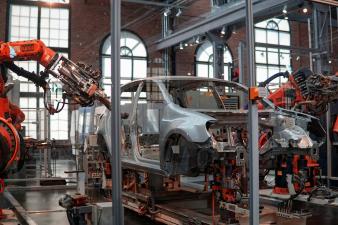
Proposed credit would allow European carmakers to meet 3% of their CO₂ targets through low-carbon steel made in the EU rising to 7.5% from 2035.
Brussels, 21 October 2026 - The European steel industry welcomes a compromise reached in the European Parliament yesterday on CO₂ standards for cars and vans, which includes a dedicated incentive for carmakers to use low-carbon steel Made in the EU.
As EU steel production rises, helping preserve up to 80,000 jobs, the industry reports €3.4 billion in investment decisions, with a further €2.4 billion expected by year-end.
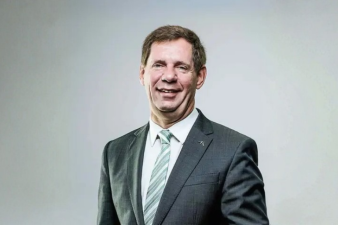
Brussels, 1 October 2026 - The European Steel Association (EUROFER) has elected Geert Van Poelvoorde, Chairman of the Board of ArcelorMittal Europe Steel, as its new President. Taking office today, Mr Van Poelvoorde said stronger home markets across the steel value chain, secure access to export markets and a strong industrial base will be essential to delivering on the European Union’s ambitions for global competitiveness and strategic autonomy.
The European Steel Association (EUROFER)
172 Avenue de Cortenbergh
1000 Brussels
Belgium
Email: mail@eurofer.eu
Phone: +32 (0) 2 738 79 20