The Carbon Border Adjustment Mechanism (CBAM) is a tool that puts a price on certain carbon intensive goods entering the EU in order to encourage climate friendly industrial production. But here’s the problem: the CBAM, as it stands, is full of loopholes. If not fixed, it would undermine decarbonisation investments, accelerate deindustrialisation, favour production in third countries, and fail to cut global emissions.
Fair play for a fair transition
European steel producers are facing increasing carbon costs under the EU Emissions Trading Scheme (ETS), while competitors in third countries have been exempted from any carbon costs. The EU steel industry is leading the transition to green production, but cheap imports risk undermining that effort.
The CBAM can be a game-changer, but only if it’s designed right.
Right now, loopholes allow foreign producers to sidestep carbon costs, shifting emissions elsewhere instead of reducing them. Without fixing these flaws, the CBAM would fail to protect EU industry and could even accelerate deindustrialisation.
CBAM Toolbox: fixing the loopholes to prevent carbon leakage
The CBAM was designed to ensure fair competition and reduce global emissions, but loopholes threaten to undermine its effectiveness. Here’s how we can fix it:
Find out more details in our full fact-sheet available for download below.
Download this publication or visit associated links
Proposed credit would allow European carmakers to meet 3% of their CO₂ targets through low-carbon steel made in the EU rising to 7.5% from 2035.
Brussels, 21 October 2026 - The European steel industry welcomes a compromise reached in the European Parliament yesterday on CO₂ standards for cars and vans, which includes a dedicated incentive for carmakers to use low-carbon steel Made in the EU.
As EU steel production rises, helping preserve up to 80,000 jobs, the industry reports €3.4 billion in investment decisions, with a further €2.4 billion expected by year-end.
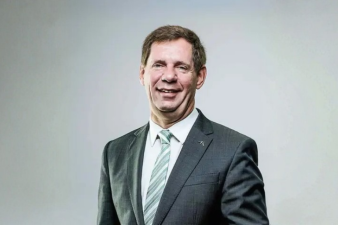
Brussels, 1 October 2026 - The European Steel Association (EUROFER) has elected Geert Van Poelvoorde, Chairman of the Board of ArcelorMittal Europe Steel, as its new President. Taking office today, Mr Van Poelvoorde said stronger home markets across the steel value chain, secure access to export markets and a strong industrial base will be essential to delivering on the European Union’s ambitions for global competitiveness and strategic autonomy.
The European Steel Association (EUROFER)
172 Avenue de Cortenbergh
1000 Brussels
Belgium
Email: mail@eurofer.eu
Phone: +32 (0) 2 738 79 20