Publications » Position papers » Protecting workers while preserving Europe’s Industrial Backbone: Industries' Recommendations regarding benzo[a]pyrene in the 6th revision of the CMR Directive
Protecting workers while preserving Europe’s Industrial Backbone: Industries' Recommendations regarding benzo[a]pyrene in the 6th revision of the CMR Directive
Downloads and links
Recent updates
Brussels, 12 February 2026 - The European aluminium, steel, coal chemical, ferroalloys and silicon, carbon and graphite industries have come together to raise serious concern about the newly proposed Occupational Exposure Limit Value for benzo[a]pyrene, as polycyclic aromatic hydrocarbon mixture (PAHs) representative, in the framework of the Proposal for a Directive of the European Parliament and of the Council amending Directive 2004/37/EC [1] regard to the addition of substances and setting limit values in its Annexes I, III and IIIa [2]. In its current formulation, the proposed occupational exposure limit value (OELV) for benzo[a]pyrene would pose a significant risk to the production of several key materials and endanger subsequent supply chains. If adopted as it stands, this would increase Europe’s reliance on imports of these materials or even value-added products. Rather than reducing risks, this approach would merely displace them, shifting the burden to workers and the environment outside the EU and beyond EU regulatory control.
Due to the nature of the raw materials required for our respective European industrial processes, undesirable and non-intentional exposure to PAHs occurs. Because there are no existing substitutes to raw materials containing PAHs, we are fully committed to ensuring the protection of our workers and consistently invest in occupational health and safety. However, in its current form, the proposal does not provide a sufficiently balanced and workable framework for effective implementation by our industries.
To ensure an effective workers’ protection while safeguarding European production of strategic and critical raw materials, we urge:
We are operating in a time of heightened geopolitical fragmentation, marked by intensified competition among nations to secure critical resources. Our sectors constitute a core pillar of Europe’s industrial base, providing raw materials to Europe’s resilience, competitiveness, and security. At a time when the European Union's role and integrity are challenged across the international stage, it is imperative that key industries like ours are not further weakened.
Signatory Sectors:
--
[1] Directive 2004/37/EC on carcinogens, mutagens and reprotoxic substances at work
[2] (COM (2025)0418 – C10-0180/2025 – 2025/0232(COD)).
[3] According to the European Commission’s impact assessment for PAH (RPA Final Report V3, 2024), compliance with the proposed OEL of 70 ng/m³ requires major site‑level upgrades (e.g. containment systems, ventilation and process enclosures), reflected in €220 million in first‑year adjustment costs and €200 million in recurrent annual costs for companies. Sector analyses show compliance burdens of up to 19% of annual turnover for SMEs and multi-million-euro capital investments in coking, aluminium, metallurgy and carbon/graphite sites (Table 0-2).
Download this publication or visit associated links
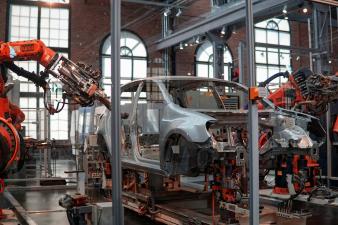
Proposed credit would allow European carmakers to meet 3% of their CO₂ targets through low-carbon steel made in the EU rising to 7.5% from 2035.
Brussels, 21 October 2026 - The European steel industry welcomes a compromise reached in the European Parliament yesterday on CO₂ standards for cars and vans, which includes a dedicated incentive for carmakers to use low-carbon steel Made in the EU.
As EU steel production rises, helping preserve up to 80,000 jobs, the industry reports €3.4 billion in investment decisions, with a further €2.4 billion expected by year-end.
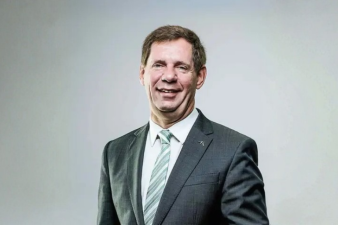
Brussels, 1 October 2026 - The European Steel Association (EUROFER) has elected Geert Van Poelvoorde, Chairman of the Board of ArcelorMittal Europe Steel, as its new President. Taking office today, Mr Van Poelvoorde said stronger home markets across the steel value chain, secure access to export markets and a strong industrial base will be essential to delivering on the European Union’s ambitions for global competitiveness and strategic autonomy.
The European Steel Association (EUROFER)
172 Avenue de Cortenbergh
1000 Brussels
Belgium
Email: mail@eurofer.eu
Phone: +32 (0) 2 738 79 20