Press releases » Strategic Dialogue on Steel is a positive step forward for the European steel sector, says EUROFER
Strategic Dialogue on Steel is a positive step forward for the European steel sector, says EUROFER
Downloads and links
Recent updates
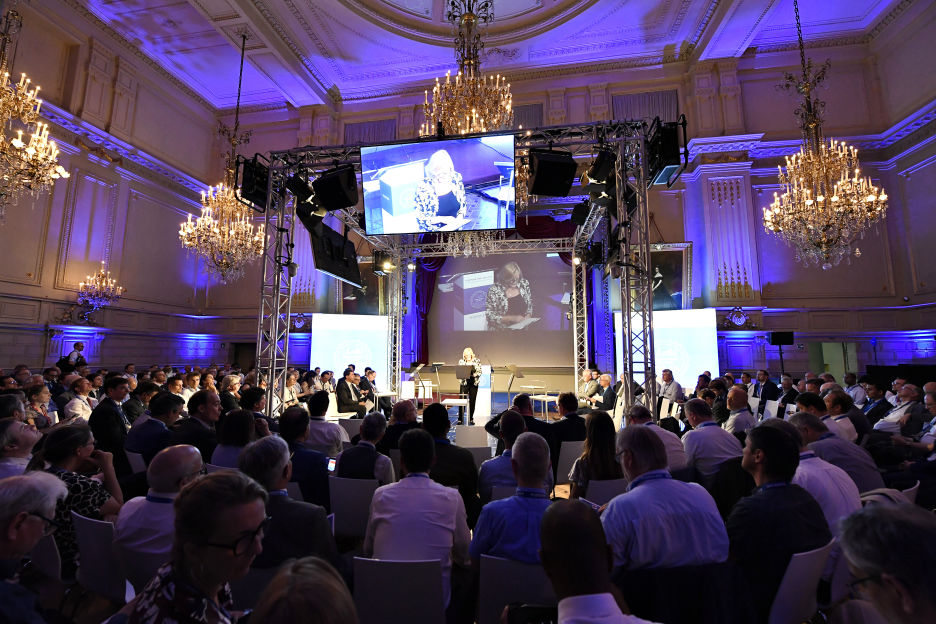
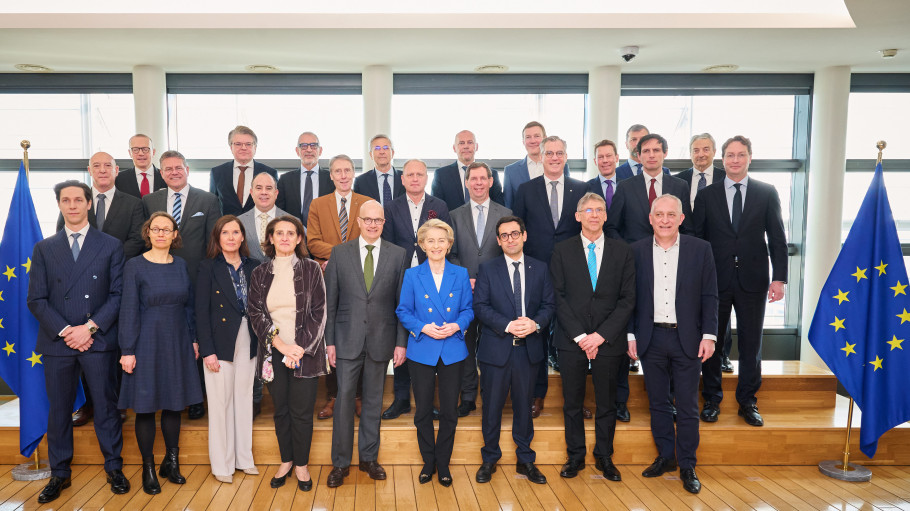
Brussels, 4 March 2025 – The European Steel Association (EUROFER) welcomes the initiative of European Commission President Ursula von der Leyen to convene a Strategic Dialogue on Steel. Today’s meeting, which brought together key representatives from across the steel value chain including EUROFER and its members, gives a much-needed foundation on which to develop industry-specific solutions with the Steel Action Plan expected to be published still this March.
“The European steel industry faces unique, existential challenges that need to be addressed urgently”, said Axel Eggert, Director General of the European Steel Association (EUROFER). “We are grateful that the Commission – at the very highest level – not only recognises these challenges but wants to work with our industry to find the right solutions. We’re looking forward to seeing these solutions reflected in proposals and legislation, starting with the forthcoming Steel Action Plan and the revision of the EU steel safeguards by 1st April”, he added.
EUROFER has consistently advocated for immediate and robust action in four priority areas:
“Across Europe, jobs and steel capacity are being lost, and decarbonisation investments are paused, while U.S. tariffs are looming. The time for half-measures is over. Building on the positive momentum from today’s Strategic Dialogue, we call on EU policymakers to stand up for European steel and rise to the historical challenge of preserving a strategic sector for Europe's future and a key pillar of the European project", concluded Mr. Eggert.
Contact
Lucia Sali, Spokesperson and Head of Communications, +32 2 738 79 35, (l.sali@eurofer.eu)
About the European Steel Association (EUROFER)
EUROFER AISBL is located in Brussels and was founded in 1976. It represents the entirety of steel production in the European Union. EUROFER members are steel companies and national steel federations throughout the EU. The major steel companies and national steel federation of Turkey, Ukraine and the United Kingdom are associate members.
The European Steel Association is recorded in the EU transparency register: 93038071152-83.
About the European steel industry
The European steel industry is a world leader in innovation and environmental sustainability. It has a turnover of around €191 billion and directly employs around 303,000 highly-skilled people, producing on average 140 million tonnes of steel per year. More than 500 steel production sites across 22 EU Member States provide direct and indirect employment to millions more European citizens. Closely integrated with Europe’s manufacturing and construction industries, steel is the backbone for development, growth and employment in Europe.
Steel is the most versatile industrial material in the world. The thousands of different grades and types of steel developed by the industry make the modern world possible. Steel is 100% recyclable and therefore is a fundamental part of the circular economy. As a basic engineering material, steel is also an essential factor in the development and deployment of innovative, CO2-mitigating technologies, improving resource efficiency and fostering sustainable development in Europe.
Steel in Action 2026
Brussels 17 July 2026 - Statement by EUROFER Director General Axel Eggert on the European Commission's proposal to revise the EU Emissions Trading System (ETS):
Brussels, 16 July 2026 - Ahead of the European Commission's review of the EU Emissions Trading System (ETS), the European Steel Association (EUROFER) reaffirmed its support for the EU's climate neutrality objective by 2050, while warning that the ETS can only succeed if it is adapted to market realities and accompanied by the enabling conditions needed for industrial decarbonisation.
The European Steel Association (EUROFER)
172 Avenue de Cortenbergh
1000 Brussels
Belgium
Email: mail@eurofer.eu
Phone: +32 (0) 2 738 79 20