Publications » Brochures, booklets or fact-sheets » Revision of the Environmental and Energy Aid Guidelines (EEAG)
Revision of the Environmental and Energy Aid Guidelines (EEAG)
Downloads and links
Recent updates
The steel industry has had a longstanding presence in Europe and remains an important employer of skilled labour. Furthermore, the industry also supports significant activity and jobs in a range of other industries throughout the EU, as a result of the large amount of money spent on the materials and services used in the steel production process. Crucially, steel makes a powerful contribution to the continent’s standard of living, by forming a key input in the work of other industrial sectors. In turn, many of these customer industries produce items essential for the functioning of the wider EU economy.
In 2017, the European steel industry made a €25 billion direct contribution to the standard ‘gross value added’ measure of EU-wide production (hereafter referred to as GVA). However, the industry’s total GVA impact that year, when supply chain and staff spending impacts are also included, was much higher, at €148 billion. This overall contribution exceeded the total GVA produced in the region of Berlin in 2017.
Download this publication or visit associated links
Proposed credit would allow European carmakers to meet 3% of their CO₂ targets through low-carbon steel made in the EU rising to 7.5% from 2035.
Brussels, 21 October 2026 - The European steel industry welcomes a compromise reached in the European Parliament yesterday on CO₂ standards for cars and vans, which includes a dedicated incentive for carmakers to use low-carbon steel Made in the EU.
As EU steel production rises, helping preserve up to 80,000 jobs, the industry reports €3.4 billion in investment decisions, with a further €2.4 billion expected by year-end.
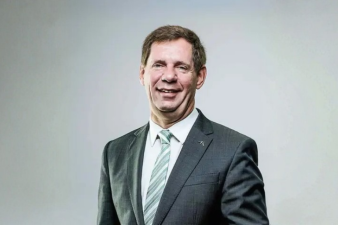
Brussels, 1 October 2026 - The European Steel Association (EUROFER) has elected Geert Van Poelvoorde, Chairman of the Board of ArcelorMittal Europe Steel, as its new President. Taking office today, Mr Van Poelvoorde said stronger home markets across the steel value chain, secure access to export markets and a strong industrial base will be essential to delivering on the European Union’s ambitions for global competitiveness and strategic autonomy.
The European Steel Association (EUROFER)
172 Avenue de Cortenbergh
1000 Brussels
Belgium
Email: mail@eurofer.eu
Phone: +32 (0) 2 738 79 20